Nvidia designs graphics processing units (GPUs), the chips that do many calculations at once, along with processors, networking gear and the software that runs on them. Its biggest buyers are cloud computing providers, companies building AI models, other businesses and government bodies, which use its systems to train and run AI. It also sells GeForce chips for gaming PCs, RTX chips for designers' workstations, and computers and software for self-driving cars.
Nvidia reports two segments. Compute & Networking covers its data center systems and its car business; Graphics covers gaming and workstation chips. Revenue in fiscal 2026 was $215.9 billion. Much of it comes from a few customers: one direct customer accounted for 22% of revenue and another for 14%. Nvidia names AMD, Intel and Huawei among its competitors, along with large cloud companies such as Amazon, Alphabet and Microsoft that design their own chips.
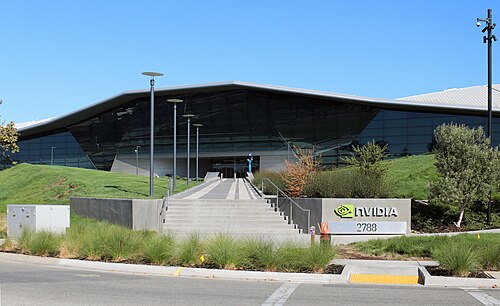
Nvidia does not own factories. It designs its products and relies on outside manufacturers such as TSMC and Samsung to make, assemble and test them. Its software, including the CUDA programming platform, is a large part of what it sells. The company is based in Santa Clara, California, and had about 42,000 employees in 38 countries at the end of fiscal 2026, most of them in research and development.